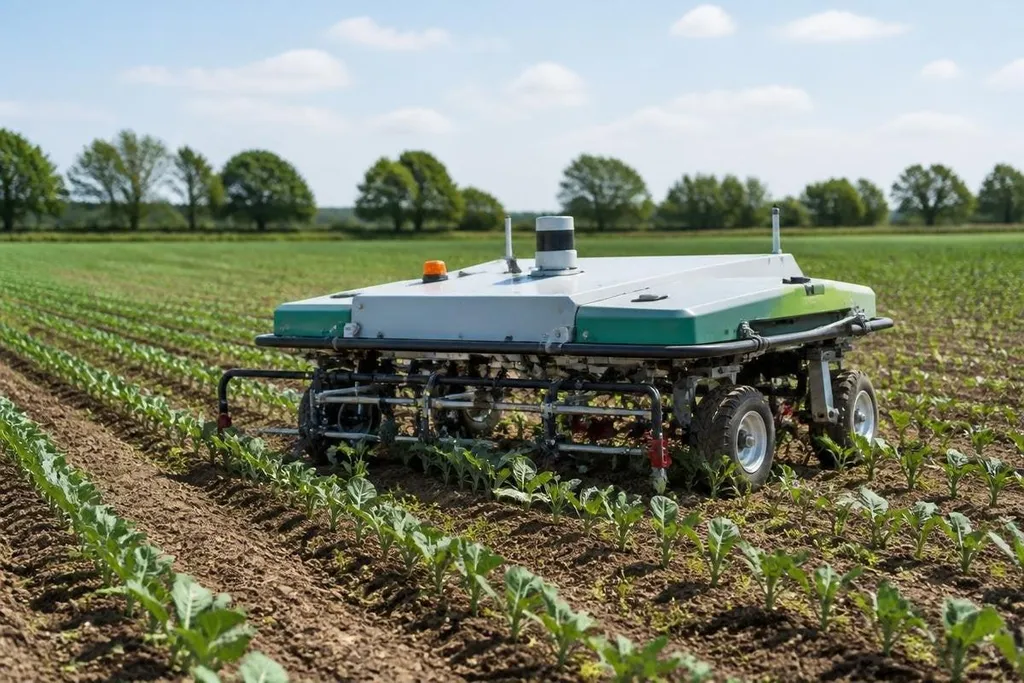
A weeding robot will earn its place on a farm by removing weeds without damaging crops, soil, or the harvest schedule. The next stage of this technology depends on field proof, not sharper demo videos.
- Crop safety comes first: the robot must tell a crop from a weed at working speed.
- Useful records matter: buyers need weed-kill rates, crop damage rates, and hectares covered per day.
- Human checks will remain: edge cases still need a person with the robot or nearby.
Better plant recognition
The hardest task is knowing what to remove. A robot may use cameras, machine learning, LiDAR, or a mix of sensors to spot plants, but recognition has to work across dust, shade, rain, crop size, and soil color.
That calls for field records from more than one row and more than one weather condition. A useful trial should report how many weeds the robot removed, how many crops it touched, and how often a worker had to stop the system.
The robot also needs to work at a speed that fits the farm. A system that identifies every plant but covers too little ground may leave the grower with the same labor bill. The useful number is hectares per day beside weed removal and crop damage.
The tool will shape the result
Seeing a weed is only half the job. The robot then needs a tool that can remove it at the right depth, distance, and force.
Mechanical tools may cut or pull weeds. Other systems may use heat, light, or a targeted spray. Each method brings a different risk to roots, young stems, soil life, and nearby plants, so the farm needs proof for its own crops and soil.
A robot that works between rows may have more room to move than one working within a row. That difference changes the sensor setup, wheel path, tool width, and safe operating speed. Product claims without these details tell a buyer very little.
Farms will need clear records
A weeding robot affects more than the machine purchase. The farm may need charging equipment, spare tools, software access, worker training, and a plan for blocked paths or heavy rain.
A field trial should record the weed type, ground conditions, work rate, and human help left after each pass. Reports from Robot 24 can give you those details before you price the robot across a full work period.
The cost test should include the whole work period.
A buyer can compare the robot with seasonal labor, tractor passes, chemical use, crop losses, repairs, and hours spent watching the machine. A low purchase price can still produce a high bill if the robot needs frequent stops or a person beside it all day.
The strongest future systems may send clear reports after each run. Those reports could show the path taken, missed areas, stopped time, tool use, and crop contacts. Records like these give a farm manager something to check before the next field run.
What still needs proof
The open questions are practical. Can the robot work after rain? Can it handle weeds at different growth stages? Can it stop when a person enters the work area? Can a worker clear a jam without special tools?
A good trial should also state what the robot could not do. That may include steep ground, dense weeds, narrow crop spacing, night work, or wet leaves. Limits are part of the buying decision, not a footnote.
I'd wait for repeated field records before treating a weeding robot as a replacement for a full farm crew.
A buyer's field checklist
Use these checks before signing a purchase order:
- Set the crop case: name the crop, row spacing, weed types, and field size.
- Ask for trial data: request hectares per day, weed removal, crop damage, and stopped time.
- Check supervision: find out how many workers must watch or reset the robot.
- Price the full setup: include charging, tools, software, training, repairs, and transport.
- Test the bad conditions: inspect results after rain, in shade, and across uneven soil.
- Plan the handoff: decide who checks missed weeds and who handles blocked paths.
The next useful milestone is a season of records from real farms, with crop damage and worker time listed beside weed removal. Until those numbers are public, the future of weeding robots is a set of promising machines waiting for a fair field test.